

Faceless Boudoir Photography Ideas: How to Reveal Everything Without Showing Your Face


Faceless boudoir photography is an intentional, fine-art approach where the subject’s face is kept out of the frame – and it produces some of the most powerful portraits I create. Rather than hiding anything, this style shifts attention to the curve of the shoulder, the drape of fabric across the back, the quiet confidence of a woman who holds the viewer’s gaze without ever looking at them. In over a decade of photographing women at my Merritt Island, Florida studio, faceless compositions have become the most requested work I do – and often, the most treasured.
I want to walk you through my favorite faceless boudoir photography ideas, and explain what makes each one work as a genuine piece of fine art – not just a portrait with the face cropped out.
What Is Faceless Boudoir Photography, and Why Does It Work?
Faceless boudoir is the intentional choice to compose portraits that communicate beauty, strength, and presence without revealing the subject’s identity. It works because identity, in this context, is carried in everything other than the face – the way a woman holds herself, the tension or release in her hands, the silhouette her body makes against the light. When the face is removed from the equation, the viewer is drawn deeper into the image rather than anchored to it.
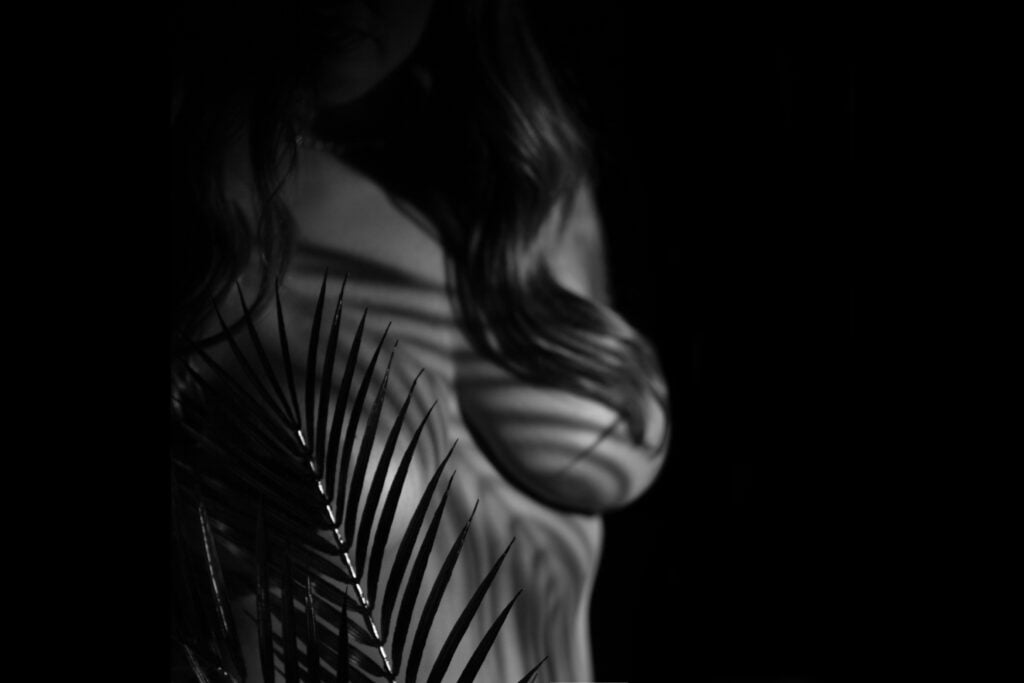
Olivia Womack Photography approaches every faceless portrait as a sculptural study – a composition where light, shape, texture, and negative space do the storytelling. These are not photographs of women with their faces cropped. They are portraits built from the ground up around the idea that identity lives in the whole person, not just the face.
What Are the Best Poses for Faceless Boudoir Photography?
The most powerful faceless boudoir poses share one quality: they give the viewer a complete sense of the woman without ever showing her face. Here are the compositions I return to most often, and what makes each one work.
The Turned Silhouette – Can a Back-to-Camera Pose Be Powerful?
Yes – a back-to-camera pose is one of the most arresting compositions in portraiture. The subject turns entirely away from the lens, and the image becomes about shape, light, and the quiet authority of a woman who doesn’t need to look at you to hold your attention. A single diffused light source – a soft window or large studio panel – creates dimension along the spine and shoulder blades. The negative space beside the body becomes part of the composition itself.
Fabric is essential here. Sheer, flowing pieces that drift along the shoulder or pool at the waist function as compositional elements – they extend the line of the body without distracting from it. This is one of the reasons so many of my most requested faceless boudoir photography ideas involve translucent layering and soft draping.
The Partial Turn – How Do You Show Presence Without Showing the Full Face?
There is something magnetic about a partial turn – the jaw visible, the eyes just out of frame, or the gaze directed deliberately away from the camera. These compositions feel intensely personal. You sense the subject’s awareness, her quiet power, without ever seeing her full expression. The key is where the eyes go: I direct women to look toward the light source, slightly past the lens, or down toward their hands. The result reads as both candid and entirely intentional.
This style translates beautifully across a range of wardrobe choices – from a classic white sheet to dramatic dark fabric to the more sculptural looks I love working with in sheer and lace. It is one of the most requested styles in my studio, and it works equally well for women who are new to boudoir and those returning for their second or third portrait journey.
Abstract Body Studies – When Does Boudoir Become Fine Art?
Fine art boudoir becomes most striking when it approaches the sculptural. These images frame specific sections of the body – the collarbone to the hip, the arc of the back from shoulder blade to lower spine, hair falling across a bare shoulder – without anchoring to face or identity. They become almost architectural. The women who choose these compositions understand that the image is not about who they are in the world, but about the profound truth of who they are in their body.
I approach these very deliberately. Framing, light ratio, background texture – every element is considered before the first frame is made. Olivia Womack Photography has created dozens of these abstract studies, and they consistently become the pieces women choose for their walls – art that celebrates them without identifying them.
How Do Hair and Hands Create Story in a Faceless Portrait?
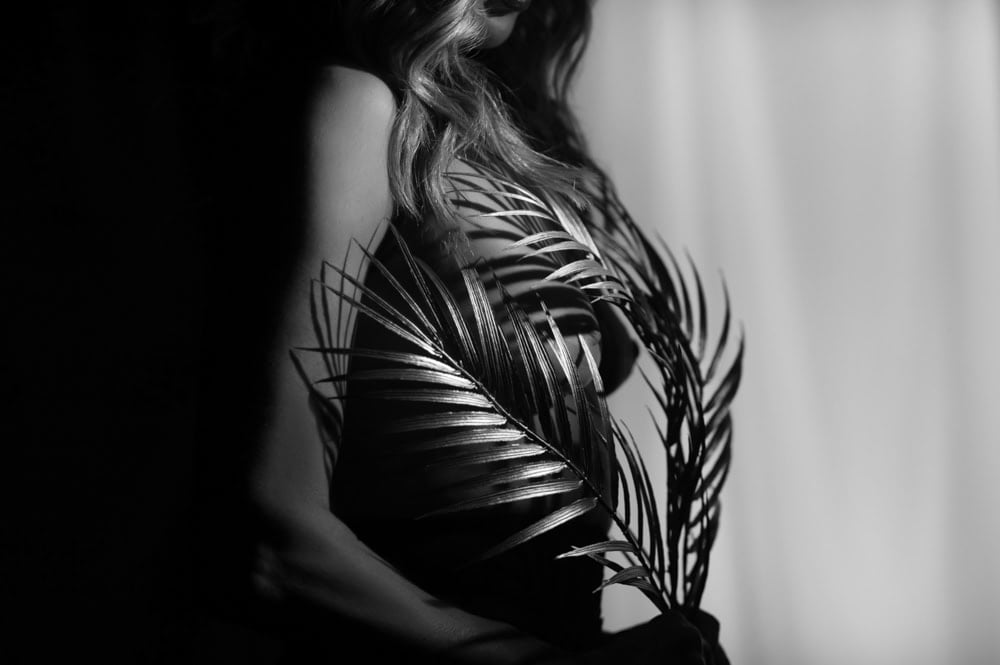
Two of the most expressive elements in a faceless boudoir portrait are the ones most people overlook: hair and hands. Long hair swept forward over the shoulder, falling across the face, creates movement, softness, and a romantic sense of mystery – the face is technically present in the frame, but partially concealed, which draws the viewer deeper into the image rather than anchoring them at eye level. I work with women in their natural hair texture for these compositions – curls, waves, and soft volume all read beautifully, and the movement feels authentic rather than arranged.
After years of photographing women, I’ve come to believe the hands are one of the most honest parts of the body. The subtle tension or release in the fingers, the elegance of a wrist, the way a palm rests at the collarbone – it tells a story no amount of facial expression could. In faceless portraiture, I often compose so that the hands are the emotional center of the image. A woman pressing her fingertips to the curve of her hip, or resting her hand open against fabric, communicates confidence, softness, and grace without a single word.
Is Faceless Boudoir Photography Right for You?
It is, if any of the following rings true. You value your privacy – but you still want the transformative experience of being truly seen and honored in a piece of art. You are creating these images for yourself, or as a gift for a partner, rather than for social sharing. You want a piece for your walls that celebrates your beauty without making you recognizable to guests. Or you are drawn, honestly and naturally, to the more sculptural, abstract end of fine-art portraiture.
In my experience, the women who choose faceless boudoir compositions often surprise themselves. They arrive believing they have chosen this style because they are not ready to be fully seen – and they leave understanding they have never felt more powerfully present in their own skin. Olivia Womack Photography works exclusively with women of purpose and presence, and this style, perhaps more than any other, reflects that mission.

How Do I Start Planning a Faceless Boudoir Session?
The first step is a conversation. Every portrait journey at my Merritt Island studio begins with a detailed planning call – we talk about your vision, your comfort level, the wardrobe and styling choices that will serve you best, and what you hope the final images will feel like when you hold them. Olivia Womack Photography creates bespoke fine-art portraits in a fully private studio environment, and every detail of your experience is thoughtfully designed around you.
You can learn more about what the experience includes on my boudoir photography page. When you are ready to begin the conversation, reach out here – I would love to hear about what you are envisioning.


